

Revenue Intelligence for Shopify Marketing Agencies
For Shopify marketing agencies—whether focused on paid ads, SEO, email marketing, or social commerce—the ultimate goal is driving high-quality traffic that converts into revenue. Agencies spend countless hours and substantial budgets optimizing ad creatives, refining audience targeting, and crafting the perfect email subject lines. However, all that hard work and ad spend is instantly wasted if the traffic lands on a storefront that fails to perform.
A marketing campaign can be perfectly executed, generating thousands of cheap clicks, but if the landing page is slow, the mobile experience is broken, or the checkout process is full of friction, those clicks will never turn into customers. When conversion rates drop, clients often blame the traffic quality or the ad platform. Marketing agencies need visibility into what happens after the click to prove that their campaigns are working and to identify the technical roadblocks that are sabotaging their Return on Ad Spend (ROAS).
When Campaigns Fail After the Click
Traffic generation is only the first half of the equation. Marketing agencies must understand the specific technical issues that cause high-intent traffic to bounce.
Slow Loading Landing Pages
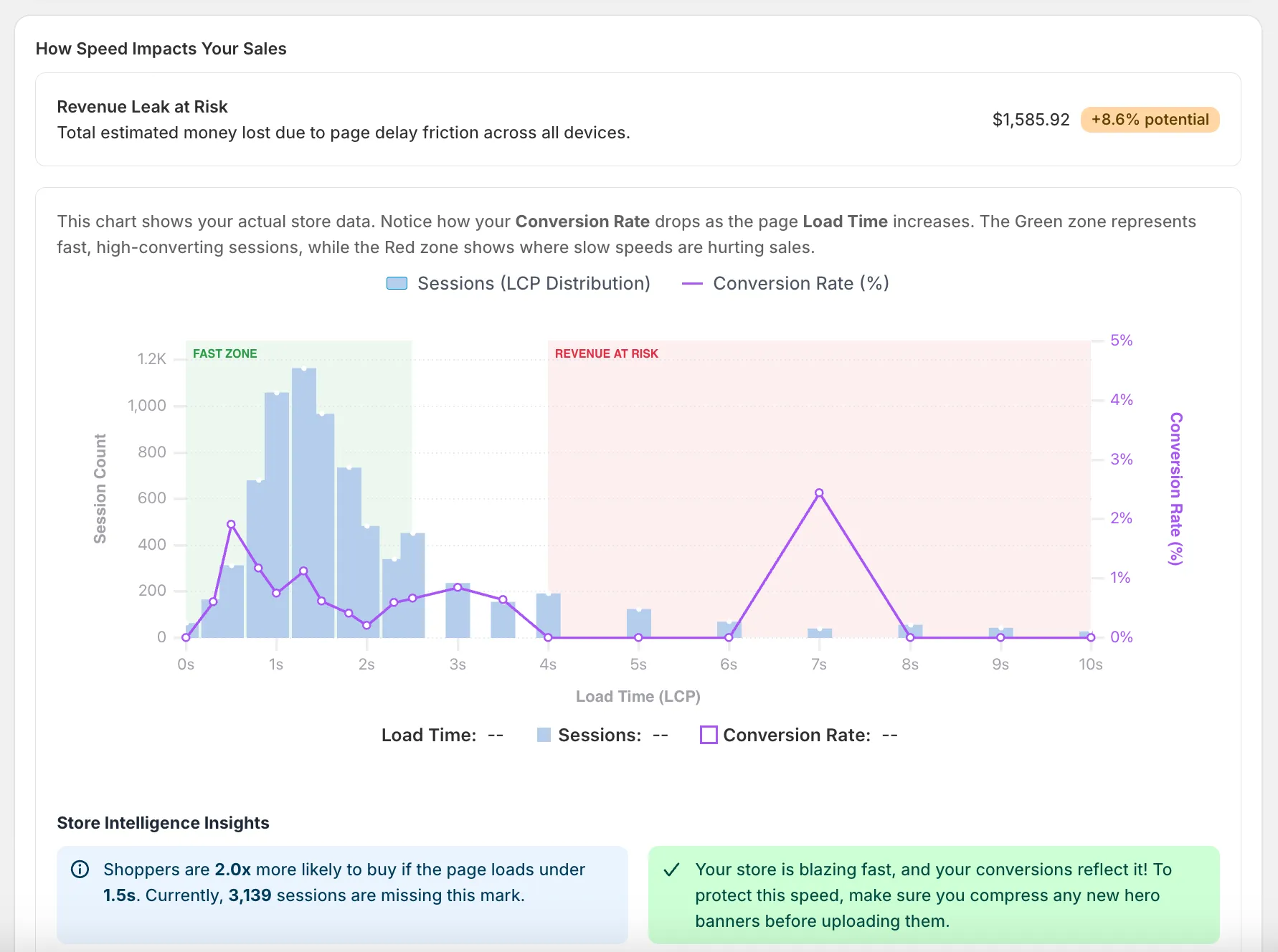
When an agency drives traffic from an Instagram ad to a specific product page, the first few seconds are critical. If the Largest Contentful Paint (LCP) takes more than a few seconds, a significant percentage of mobile users will bounce before the page even renders. The agency paid for the click, but the client gained nothing.
Mobile Friction and Webview Issues
A massive amount of ecommerce traffic now originates from social platforms like TikTok, Instagram, and Facebook. These users are often browsing within the platform’s embedded in-app browser (webview). Webviews are notoriously slower and less forgiving than standard mobile browsers like Safari or Chrome. If a Shopify store isn’t optimized for these specific environments, social traffic will experience severe latency and high abandonment rates.
The Broken Checkout
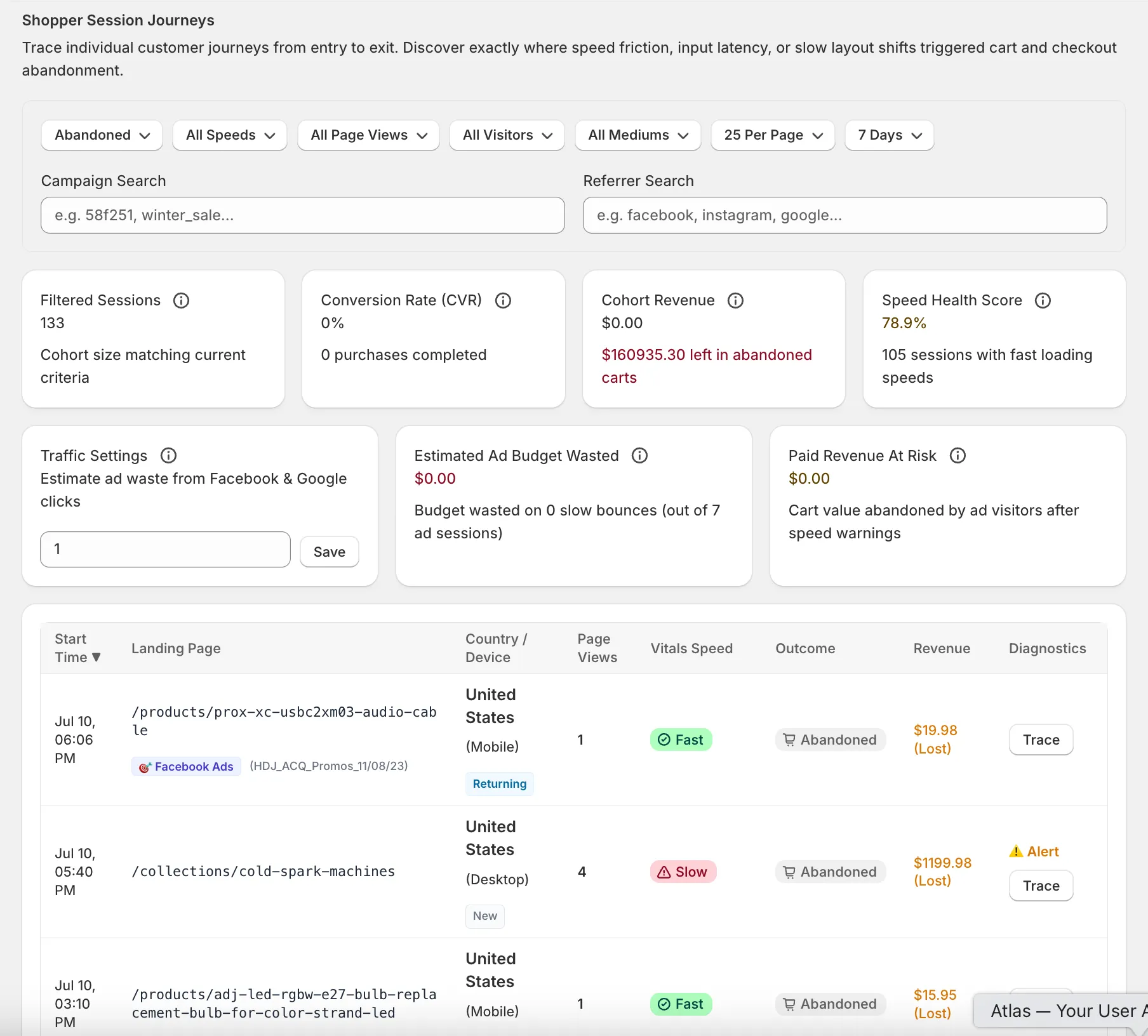
There is nothing more frustrating for a marketing agency than driving a user all the way to the checkout, only for a technical failure to prevent the purchase. Whether it’s a delayed shipping rate calculator, a malfunctioning payment gateway script, or an unresponsive button, technical friction at the checkout destroys ROAS and artificially deflates the apparent success of the marketing campaign.
Broken Links Wasting Traffic
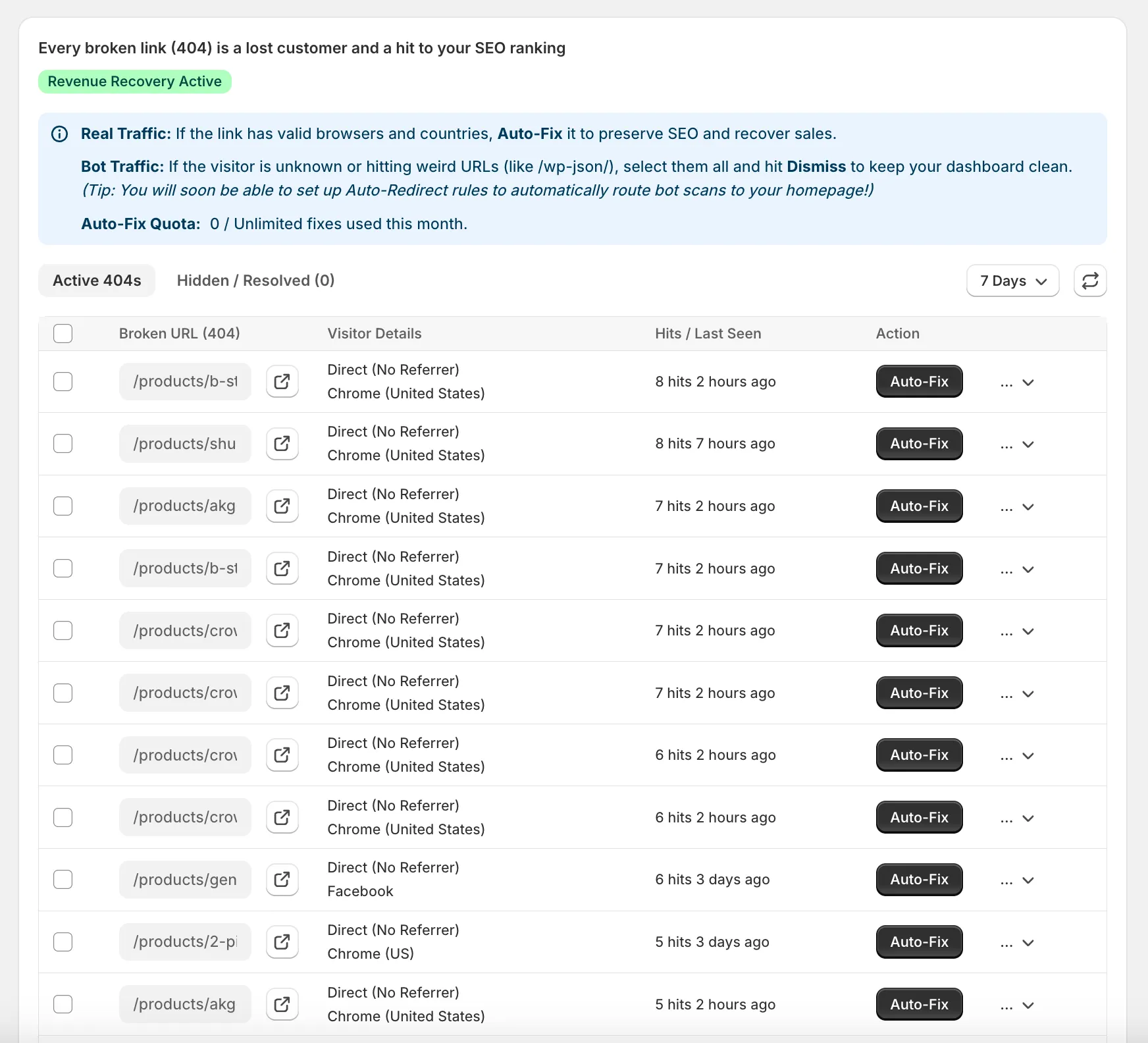
In complex SEO or email marketing campaigns, driving traffic to a 404 error page is a complete waste of resources. Not only does it result in an immediate bounce, but it also damages brand trust and can negatively impact SEO rankings over time.
How Superspeed Connects Traffic to Revenue
Superspeed provides Shopify marketing agencies with the crucial link between traffic acquisition and technical performance, allowing them to defend their campaigns and guide clients toward necessary optimizations.
Connecting Traffic, Experience, and Conversion
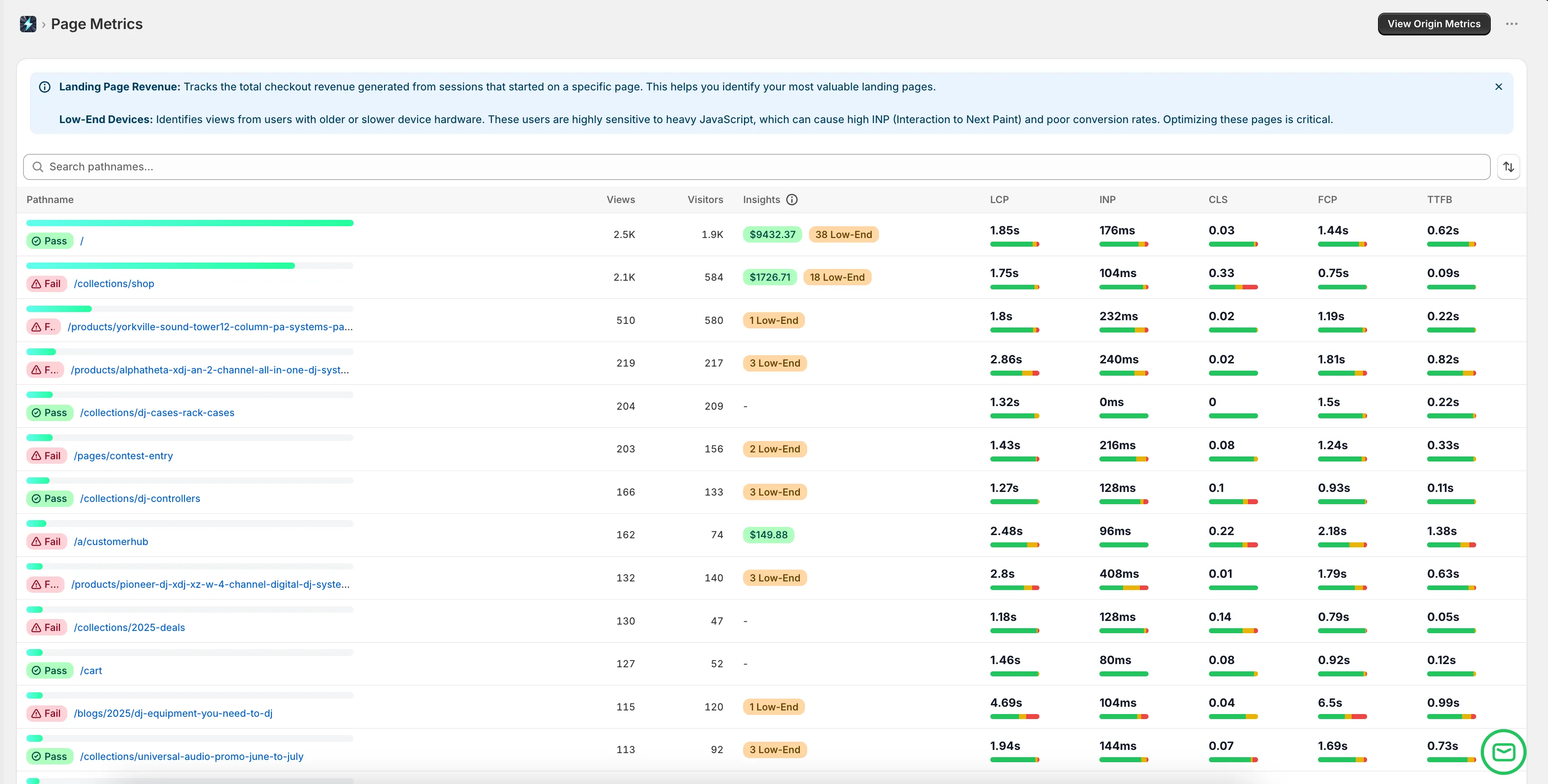
Superspeed doesn’t just measure speed; it measures the user’s experience. By tracking Real User Monitoring (RUM) data, agencies can see exactly how the site performs for the traffic they are driving. If an ad campaign has a low conversion rate, Superspeed can reveal whether the issue was the audience targeting or an Interaction to Next Paint (INP) issue that frustrated users on the landing page.
Diagnosing Landing Page Performance
Before launching a major paid campaign or a high-volume email blast, agencies use Superspeed to ensure the specific landing pages are technically sound. By identifying and resolving heavy images or blocking scripts beforehand, the agency guarantees that the traffic they generate has the best possible chance of converting.
Identifying Social Webview Friction
Superspeed’s granular data allows agencies to segment performance by device and browser type. Marketing teams can specifically look at how the store performs within TikTok or Instagram webviews, identifying unique friction points that are suppressing the conversion rate of their social commerce efforts.
Uncovering Checkout Friction (Ghost Checkouts)
Superspeed excels at identifying “ghost checkouts”—sessions where users demonstrated high purchase intent but abandoned the process due to a technical failure. By highlighting these specific revenue leaks, marketing agencies can show clients that the ads are indeed driving qualified buyers, but the storefront is failing to capture them.
Becoming a Holistic Revenue Partner
Integrating performance intelligence into the marketing workflow changes the agency-client dynamic.
Instead of defensively explaining why a Facebook ad campaign didn’t yield a 3x ROAS, the marketing agency can proactively point to data: “Our campaign drove 5,000 highly qualified clicks at a low CPC. However, Superspeed’s data shows that 40% of those mobile users experienced a 6-second load time on the product page, resulting in immediate bounces. We need to optimize this landing page to realize the true ROAS of this campaign.”
This level of insight protects the agency from unwarranted blame and positions them as a holistic revenue partner. By using Superspeed to identify and quantify the revenue impact of technical friction, Shopify marketing agencies ensure that their brilliant campaigns aren’t undermined by a slow storefront, maximizing ROI for both the agency and the client.