

Proactive Monitoring for Shopify Maintenance Agencies
For agencies specializing in Shopify support and maintenance, the traditional business model is often entirely reactive. A client submits a ticket because a page looks broken, a third-party app is causing the checkout to hang, or their traffic suddenly plummeted due to a Core Web Vitals failure. The agency then scrambles to investigate the issue, fix the code, and reassure the frustrated client.
This reactive approach is stressful for the agency and erodes trust with the merchant. The client inevitably wonders, “Why am I paying a monthly retainer if I’m the one finding all the bugs?” To build scalable, high-margin maintenance retainers, agencies must shift from reactive break-fix support to proactive monitoring and revenue protection. They need tools that alert them to performance regressions and technical friction before the client—or worse, the client’s customers—even notices.
The Flaws of Reactive Maintenance
Relying on clients to report technical issues is a deeply flawed strategy for any professional Shopify maintenance agency.
Damage is Already Done
By the time a merchant submits a support ticket regarding a slow checkout or a broken mobile layout, the issue has likely already cost them thousands of dollars in lost sales. The agency is placed in a defensive position, trying to stop the bleeding rather than adding value.
The Difficulty of Reproduction
When a client reports an issue like “the site feels slow today,” debugging is incredibly difficult. Without historical data or session tracing, the agency’s developers have no context. They are forced to run synthetic Lighthouse tests that may not recreate the specific conditions (e.g., a specific device type on a slow network) that triggered the client’s complaint.
Justifying the Retainer
If an agency operates smoothly and prevents major outages, the client might perceive that the agency “isn’t doing anything” and question the value of the ongoing retainer. Agencies need concrete data to prove that they are actively protecting the store’s performance and revenue, even when things are running quietly.
Proactive Maintenance with Superspeed
Superspeed transforms Shopify maintenance by providing automated, continuous monitoring of the entire storefront. It allows agencies to become the first line of defense, identifying and resolving technical friction before it impacts the merchant’s bottom line.
Continuous Core Web Vitals Monitoring
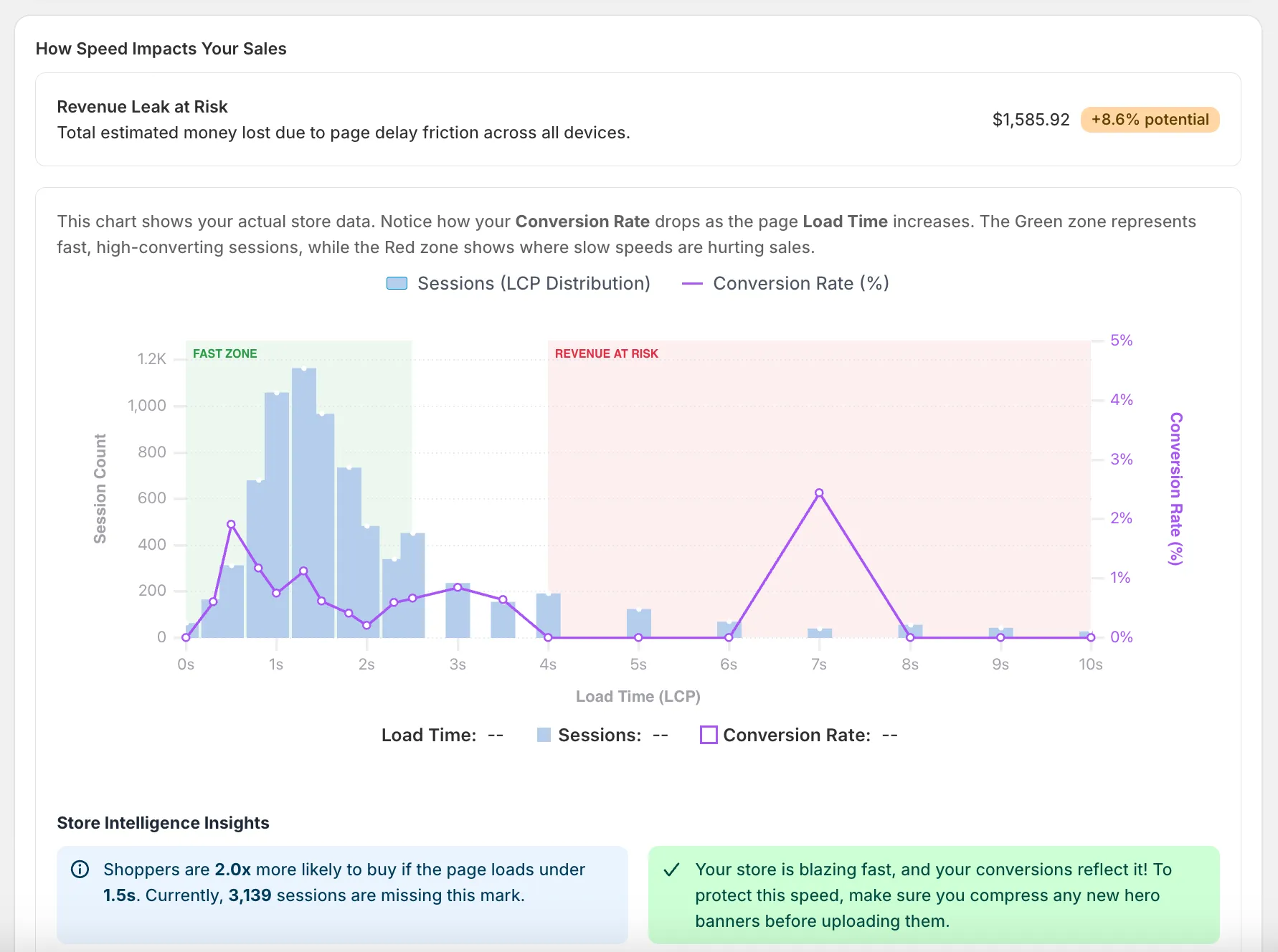
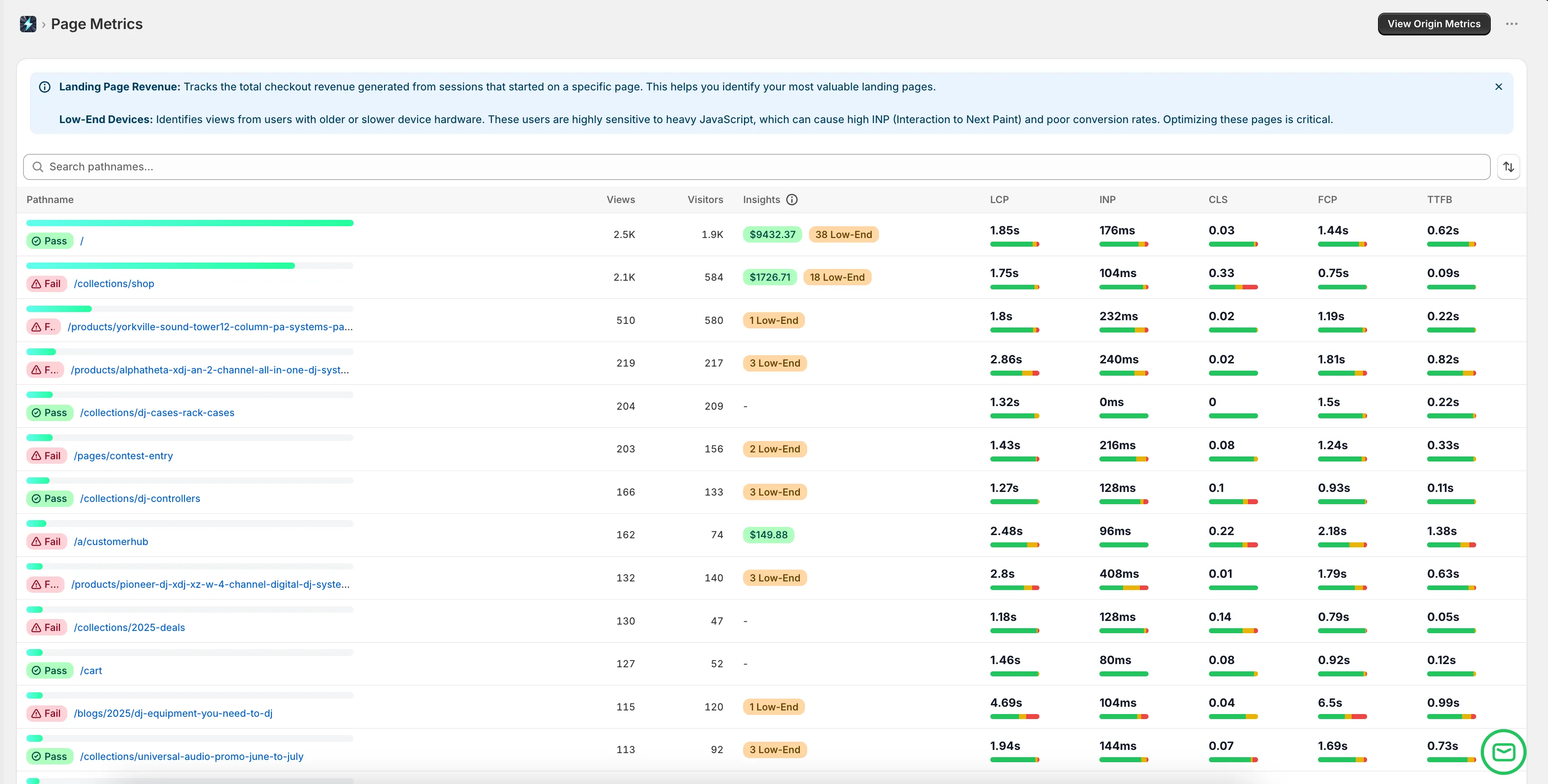
Search engines are increasingly penalizing slow sites. Superspeed continuously monitors Core Web Vitals (LCP, INP, CLS) using Real User Monitoring (RUM). If a client installs a heavy unoptimized image banner that spikes their LCP, the agency sees the regression immediately on their dashboard and can proactively optimize the asset before the client’s SEO rankings suffer.
Automated Issue Detection
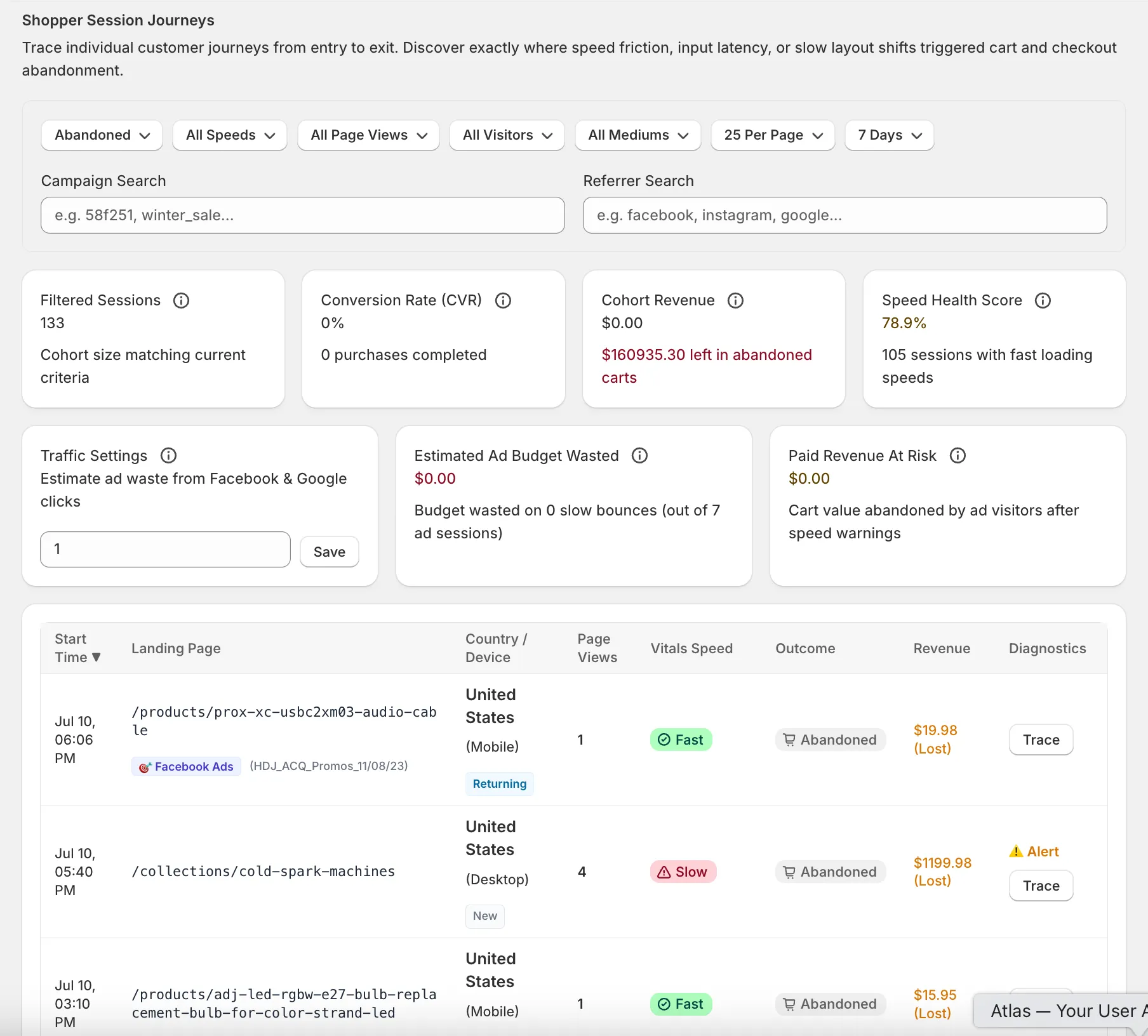
Superspeed acts as an automated QA team running 24/7. It tracks dead clicks, rage clicks, and severe latency issues across all user sessions. Instead of waiting for a ticket, the maintenance team can review the Superspeed dashboard daily to identify pages that are causing user frustration and deploy preemptive fixes.
Ghost Checkout Alerts
The most critical flow on any Shopify store is the checkout. Superspeed detects “ghost checkouts”—sessions where high-intent buyers encountered technical friction that prevented them from completing their purchase. For a maintenance agency, this is the highest priority alert. Fixing a broken payment script or a slow shipping calculator immediately justifies the cost of the retainer.
Broken Link Detection
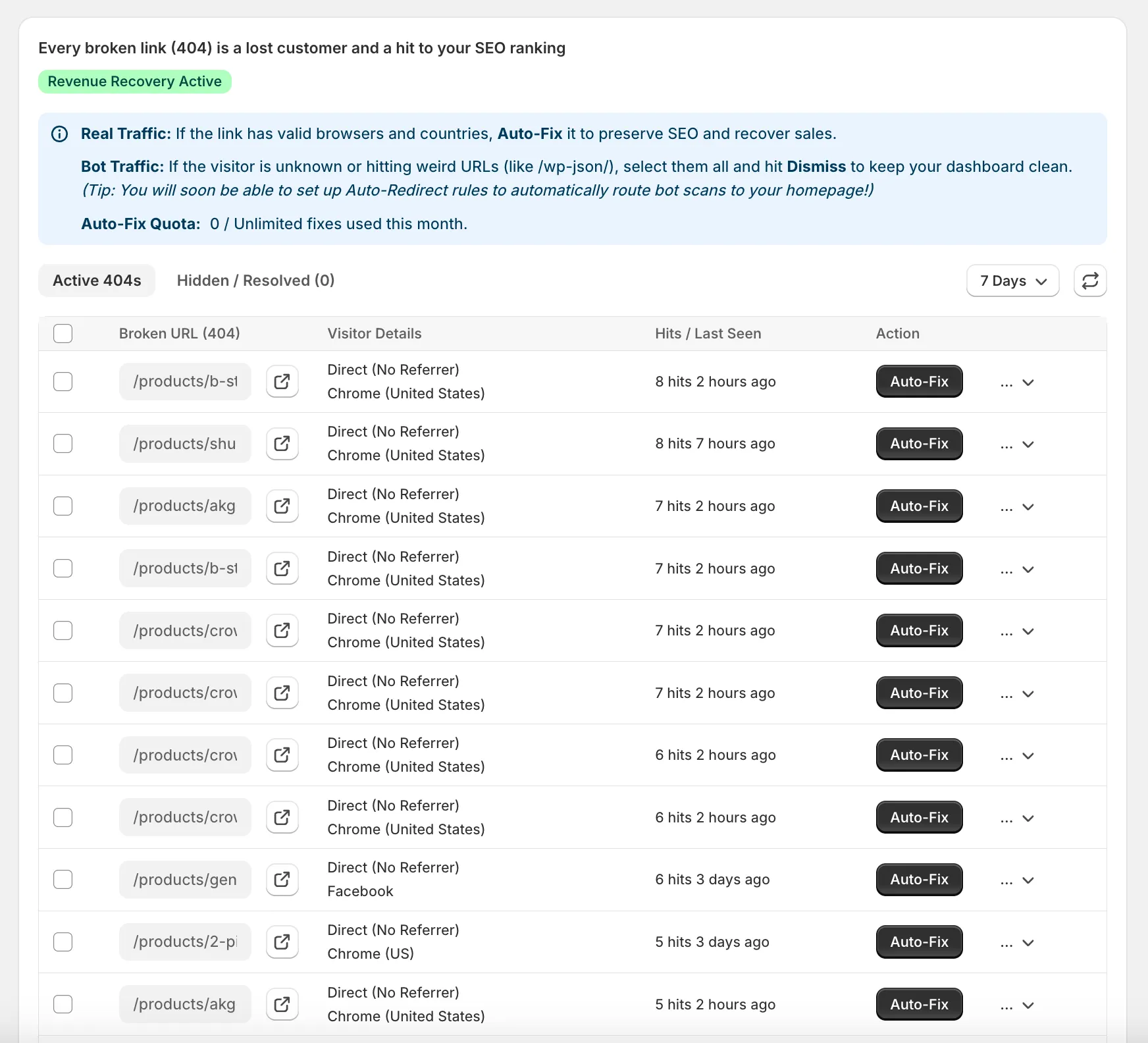
Broken links (404s) frustrate users and harm SEO. Superspeed continuously scans the storefront for broken links, allowing the maintenance team to redirect them proactively, ensuring a seamless user journey and protecting organic search equity.
Structuring the Modern Maintenance Retainer
With proactive monitoring tools in place, agencies can structure their retainers around value and peace of mind, rather than just hourly development blocks.
The “Revenue Protection” Retainer: Instead of selling “10 hours of support per month,” the agency sells a “Revenue Protection Plan.” This plan includes:
- 24/7 RUM performance monitoring via Superspeed.
- Weekly Core Web Vitals health checks and proactive optimizations.
- Immediate response to “Ghost Checkout” alerts.
- Monthly reporting demonstrating the technical issues resolved and the potential revenue protected.
This framing shifts the agency from an expense to an investment. The client understands they are paying for insurance against technical friction and lost sales.
Proving Value Through Data
When a maintenance agency conducts a monthly review with a client using Superspeed, the conversation completely changes.
Instead of saying, “We handled 5 support tickets and updated your theme,” the agency can report: “Our monitoring detected that a newly installed marketing app degraded your mobile response times (INP) by 400ms, leading to a spike in rage clicks on the product page. We proactively deferred the app’s script, restoring performance to baseline and protecting an estimated $3,000 in monthly revenue that would have otherwise been lost to abandonment.”
This data-driven reporting proves undeniable ROI. The client clearly sees the value of having a technical team actively watching their back.
Conclusion
For Shopify maintenance agencies, the goal is to be invisible to the merchant while being indispensable to their business.
Superspeed provides the automated monitoring, deep diagnostic data, and revenue intelligence required to achieve this. By shifting from reactive support to proactive revenue protection, maintenance agencies can drastically reduce client churn, command higher retainer fees, and establish themselves as trusted guardians of their clients’ ecommerce success.