

Shopify Performance Monitoring Built for Agencies
For agencies specializing in Shopify speed optimization, the industry is undergoing a massive shift. The old model—selling a one-time “speed audit,” running a Lighthouse test, deferring a few scripts, and walking away—is no longer enough. Modern merchants demand more. They understand that performance is continuous, and they want proof that the optimization work is actually improving the shopping experience and driving revenue.
Performance optimization is no longer just about chasing an arbitrary score of 100 on Google PageSpeed Insights. It is about understanding how technical friction impacts real users and, ultimately, the merchant’s bottom line. To succeed in this new landscape, performance agencies need tools built specifically for continuous monitoring, deep technical insights, and clear revenue correlation.
The Problem with Traditional Speed Reporting
Many performance agencies still rely heavily on synthetic testing tools like Lighthouse to prove the value of their work. While Lighthouse is a valuable development tool, it is inadequate for ongoing client reporting and true performance monitoring.
Why Lighthouse is Insufficient
Lighthouse evaluates a page in a simulated, sterile environment. It assumes a specific device, a specific network speed, and a clean browser cache. It does not account for the immense variability of real-world shopping. A perfect Lighthouse score provides a false sense of security if a merchant’s actual customers are browsing on older devices over spotty 3G networks and experiencing massive delays.
Synthetic Testing vs. Real-User Monitoring (RUM)
Synthetic testing is predictive; it guesses how a site might perform. Real-User Monitoring (RUM) is factual; it measures how a site actually performed for real people. When a client complains that their site feels slow, but their Lighthouse score is high, synthetic tools offer no answers. Only RUM can reveal the true performance bottlenecks affecting the actual customer base.
How Agencies Monitor Multiple Stores with Superspeed
Superspeed transforms how performance agencies operate by providing a comprehensive, multi-store RUM platform designed specifically for the complexities of Shopify.
The Agency Dashboard
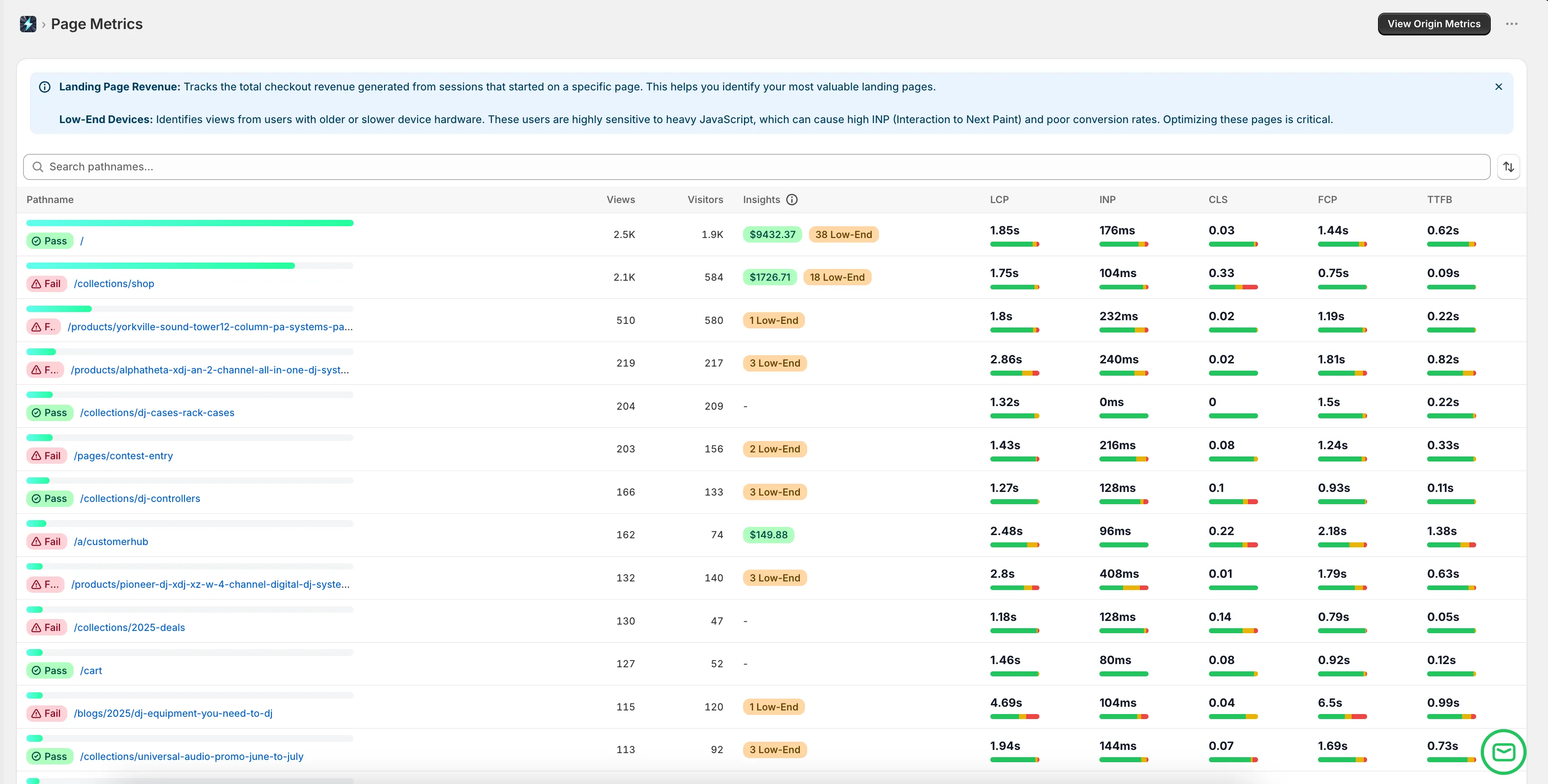
Instead of managing dozens of separate analytics accounts or running manual tests for each client, agencies use Superspeed’s centralized dashboard. This provides a high-level view of the performance health across the entire client portfolio. Agencies can immediately spot which stores are failing Core Web Vitals thresholds or experiencing sudden performance regressions.
Tracking the Metrics That Matter
Superspeed goes far beyond simple page load times. It tracks the crucial user-centric metrics that define a modern web experience:
- Largest Contentful Paint (LCP): Measures how quickly the main content of a page renders. Crucial for first impressions and SEO.
- Interaction to Next Paint (INP): Measures the responsiveness of the page to user input. High INP causes extreme user frustration, leading to rage clicks and abandonment.
- Cumulative Layout Shift (CLS): Measures visual stability. High CLS causes shoppers to click the wrong buttons or lose their place on the page.
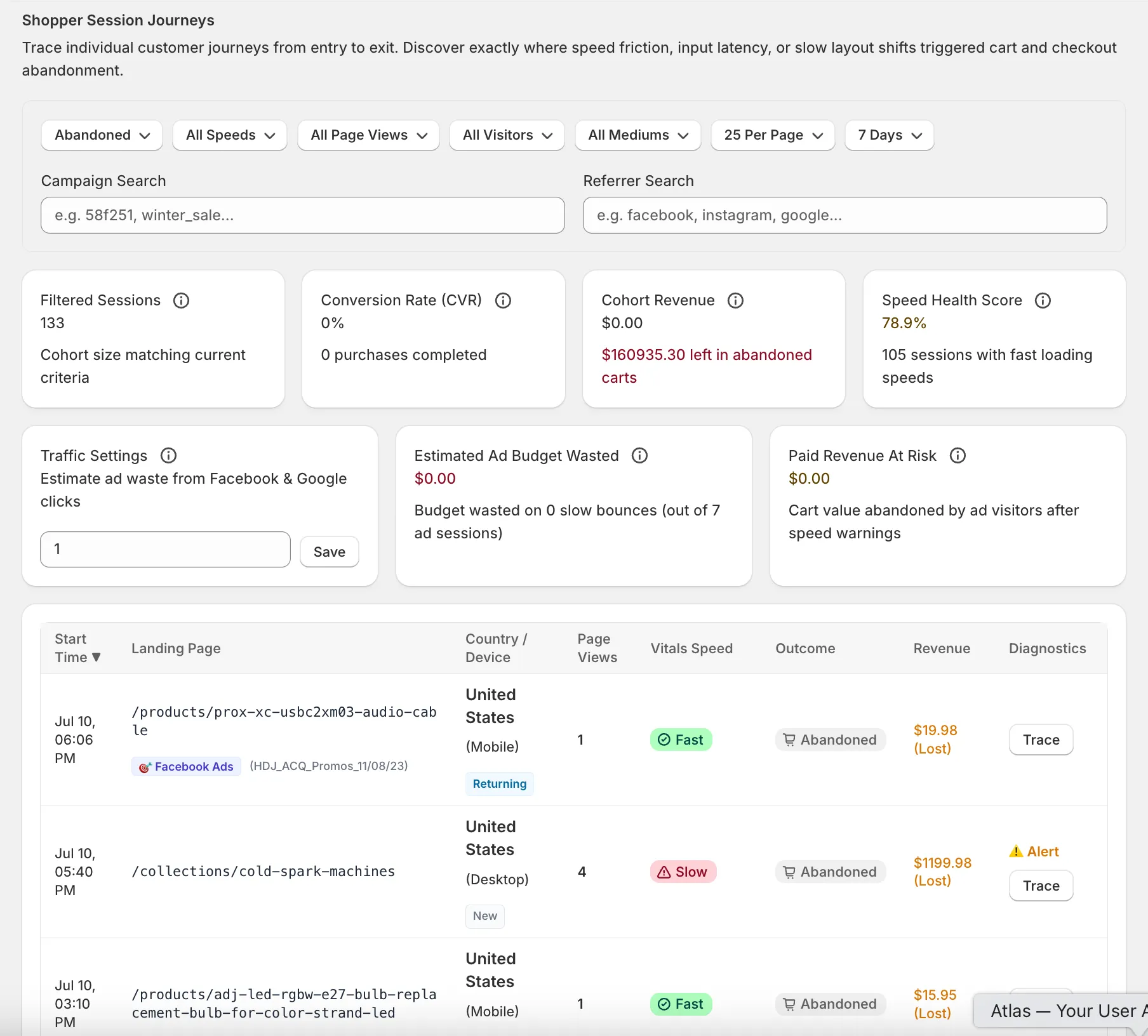
- Rage Clicks and Dead Clicks: Superspeed identifies sessions where users repeatedly click an element out of frustration, signaling a broken script or severe latency.
- Checkout Friction: Detailed monitoring of the checkout flow to identify specific technical failures that cause high-intent buyers to leave.
The Shift: From Speed Scores to Revenue Impact
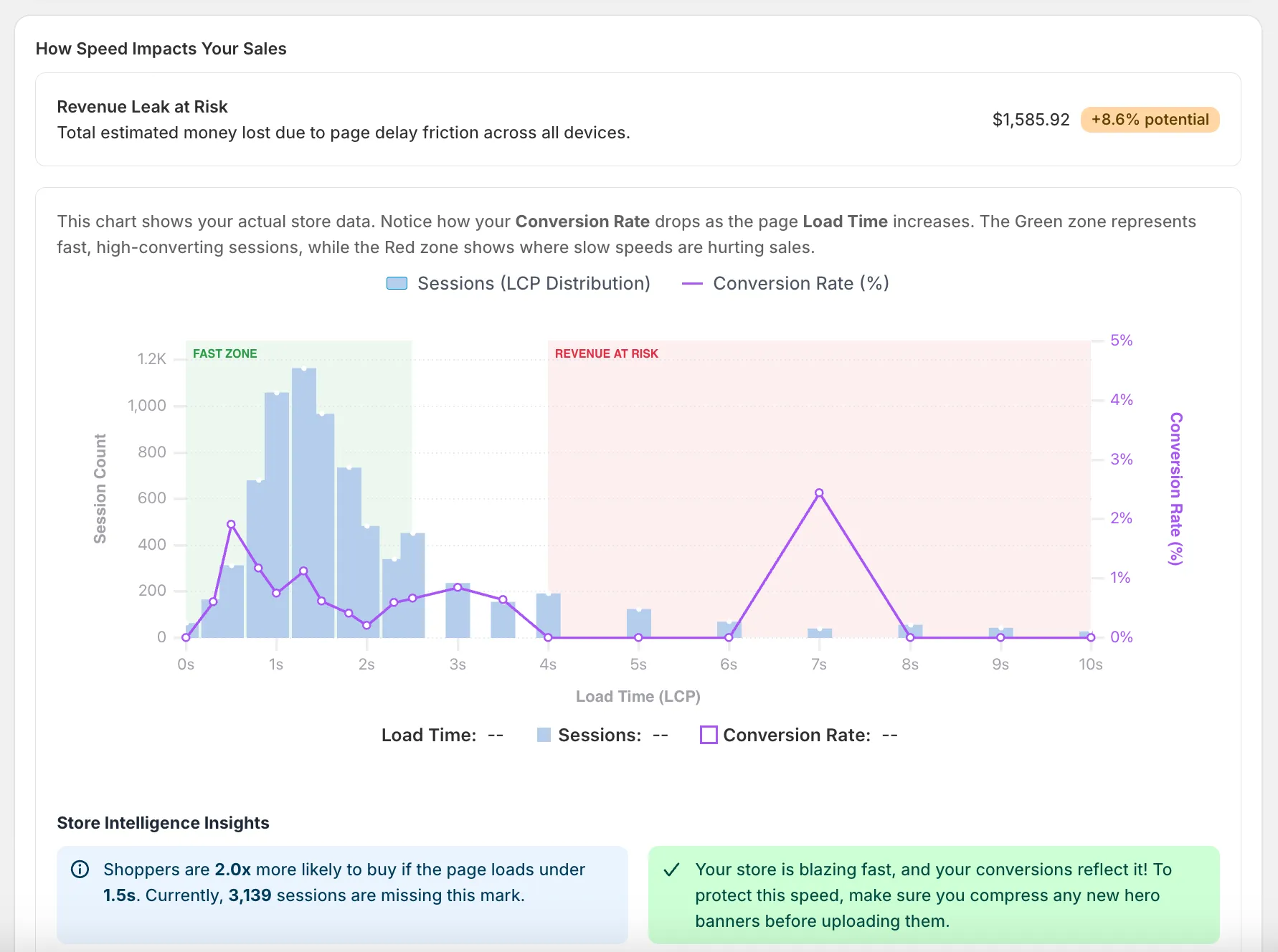
The most significant advantage performance agencies gain with Superspeed is the ability to shift the conversation from technical jargon to business outcomes.
Performance optimization is no longer about scores. It is about revenue impact.
When an agency can show a client not just that their LCP improved by 1.5 seconds, but that this improvement resulted in a specific, measurable decrease in abandoned sessions and an uplift in captured revenue, the agency transitions from a vendor to an indispensable partner.
The Modern Performance Agency Workflow
Superspeed empowers agencies to establish a robust, continuous optimization workflow that justifies ongoing retainers.
1. Audit & Baseline
Using Superspeed’s RUM data, the agency establishes a true baseline of current performance based on real shopper data, identifying the specific pages and devices causing the most friction.
2. Identify Revenue Leaks
Instead of guessing what to fix first, the agency uses Superspeed’s revenue impact analysis to prioritize issues. If a slow INP on the mobile product page is costing the client $5,000 a month in lost sales, that becomes the immediate priority.
3. Fix & Optimize
The development team implements targeted fixes—optimizing the critical rendering path, delaying non-essential third-party scripts, and stabilizing layouts.
4. Measure Real-World Results
Immediately after deployment, Superspeed’s live RUM data confirms whether the fixes were successful for actual users, without waiting weeks for SEO rankings to adjust.
5. Report on Business Outcomes
The agency presents a report showing the reduction in technical friction (fewer rage clicks, improved Core Web Vitals) and the direct correlation to recovered revenue and improved conversion rates.
Traditional Speed Reports vs. Superspeed Dashboards
The contrast between old reporting methods and the Superspeed platform is stark.
Traditional Speed Reports:
- Based on simulated, synthetic data (Lighthouse).
- Focus on technical scores that clients don’t understand.
- Provide a static snapshot in time.
- Offer zero insight into the impact on revenue or actual shopper behavior.
Superspeed Dashboards:
- Based on 100% real-user monitoring (RUM).
- Focus on user-centric Core Web Vitals and revenue impact.
- Provide continuous, live monitoring.
- Clearly connect technical performance to business outcomes, proving the ROI of the agency’s work.
Conclusion
For Shopify performance agencies, relying on Lighthouse scores for client reporting is a strategy of the past. To build trust, justify retainers, and deliver true value, agencies must adopt tools that measure the real-world experience of shoppers.
Superspeed provides the comprehensive monitoring, deep technical insights, and revenue intelligence that modern performance agencies need to elevate their services and prove their undeniable impact on their clients’ success.