

The Performance Engine for Ecommerce Growth Agencies
Ecommerce growth agencies operate at the intersection of marketing, technology, and user experience. Their mandate is not just to drive traffic or build a pretty website; their mandate is to aggressively and predictably scale a brand’s revenue. To achieve this, growth agencies rely heavily on data—analyzing cohorts, optimizing lifetime value (LTV), and scrutinizing customer acquisition costs (CAC).
However, a massive blind spot exists in many growth strategies: the technical performance of the storefront itself. A growth agency can optimize the entire funnel—from the Facebook ad to the email sequence—but if the underlying Shopify infrastructure is slow, unresponsive, or technically fragile, the entire growth model collapses. Technical friction acts as a silent tax on every marketing dollar spent and every optimization implemented. To truly scale a brand, growth agencies must treat storefront performance as a critical, measurable lever for revenue.
The Blind Spot in Growth Strategies
Many growth teams view performance optimization as a purely IT concern—something for developers to handle in isolation. This mindset leads to missed opportunities and unexplained dips in conversion rates.
The Silent Conversion Killer
When conversion rates suddenly drop, growth teams typically look first at ad fatigue, out-of-stock products, or seasonal trends. They rarely look at the fact that a newly installed merchandising app just added 3 seconds of render-blocking JavaScript to the product page. This technical friction is a silent conversion killer that standard marketing analytics tools are not equipped to diagnose.
Wasted Experimentation
Growth requires rapid experimentation. But if a team runs an A/B test on a page that is suffering from severe Cumulative Layout Shift (CLS) or Interaction to Next Paint (INP) delays, the results are fundamentally tainted. Users are abandoning the page because it feels broken, not necessarily because they disliked the new headline.
Incomplete Revenue Attribution
Growth agencies pride themselves on attribution—knowing exactly which channels drive revenue. But when a session is abandoned due to a technical failure at checkout (a “ghost checkout”), the revenue is lost without a clear explanation in the marketing dashboard. The growth team needs visibility into these technical failures to accurately assess the true potential of their campaigns.
How Growth Agencies Leverage Superspeed
Superspeed bridges the gap between technical performance and business growth, providing agencies with the intelligence needed to eliminate friction and maximize revenue across their Shopify portfolios.
Comprehensive Multi-Store Visibility
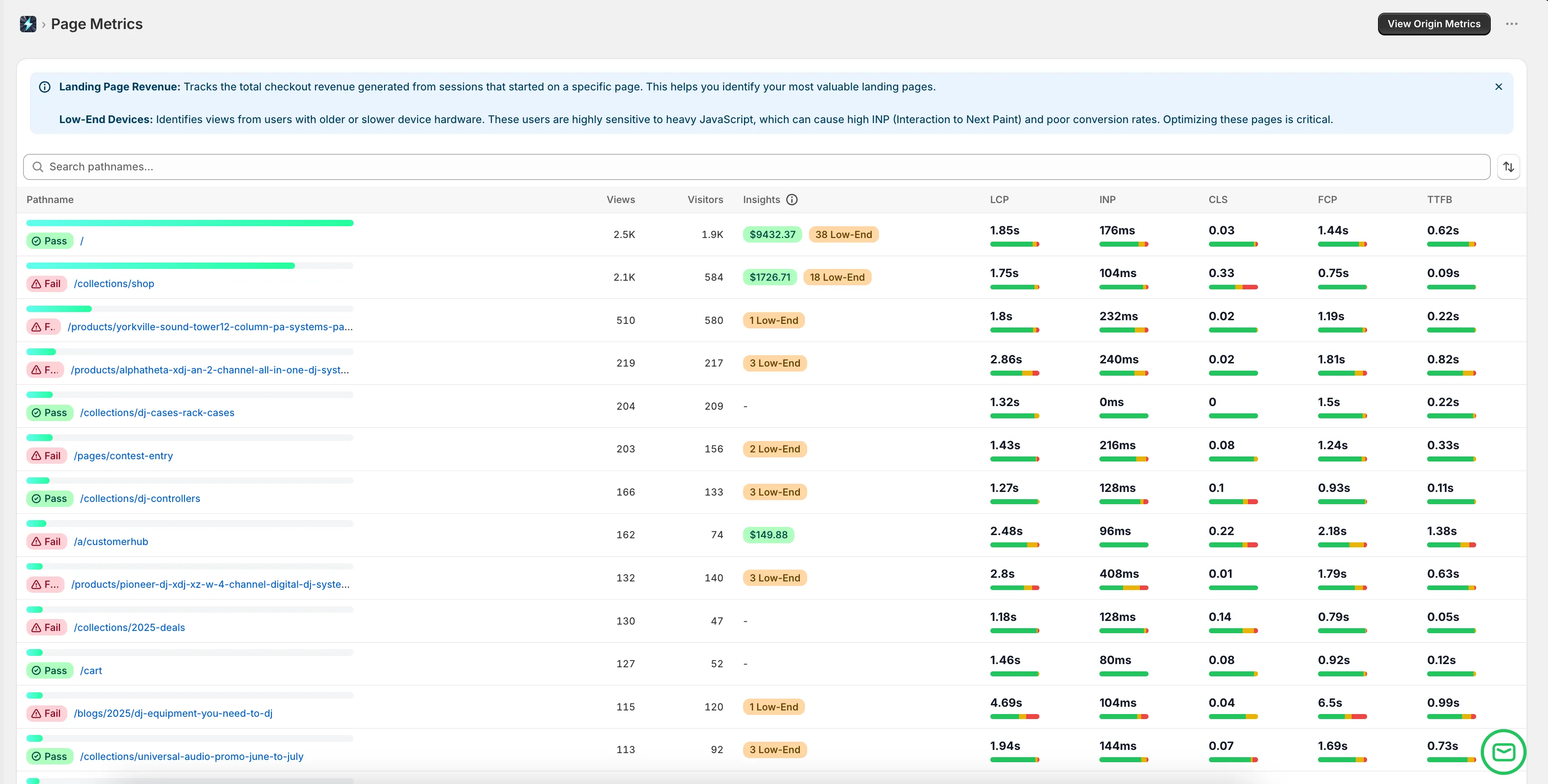
Growth agencies managing multiple high-volume Shopify brands need a command center. Superspeed’s agency dashboard provides a unified view of the performance health of the entire portfolio. Agencies can instantly see which stores are passing Core Web Vitals thresholds and which are suffering from performance regressions that threaten conversion rates.
Identifying Revenue Leaks
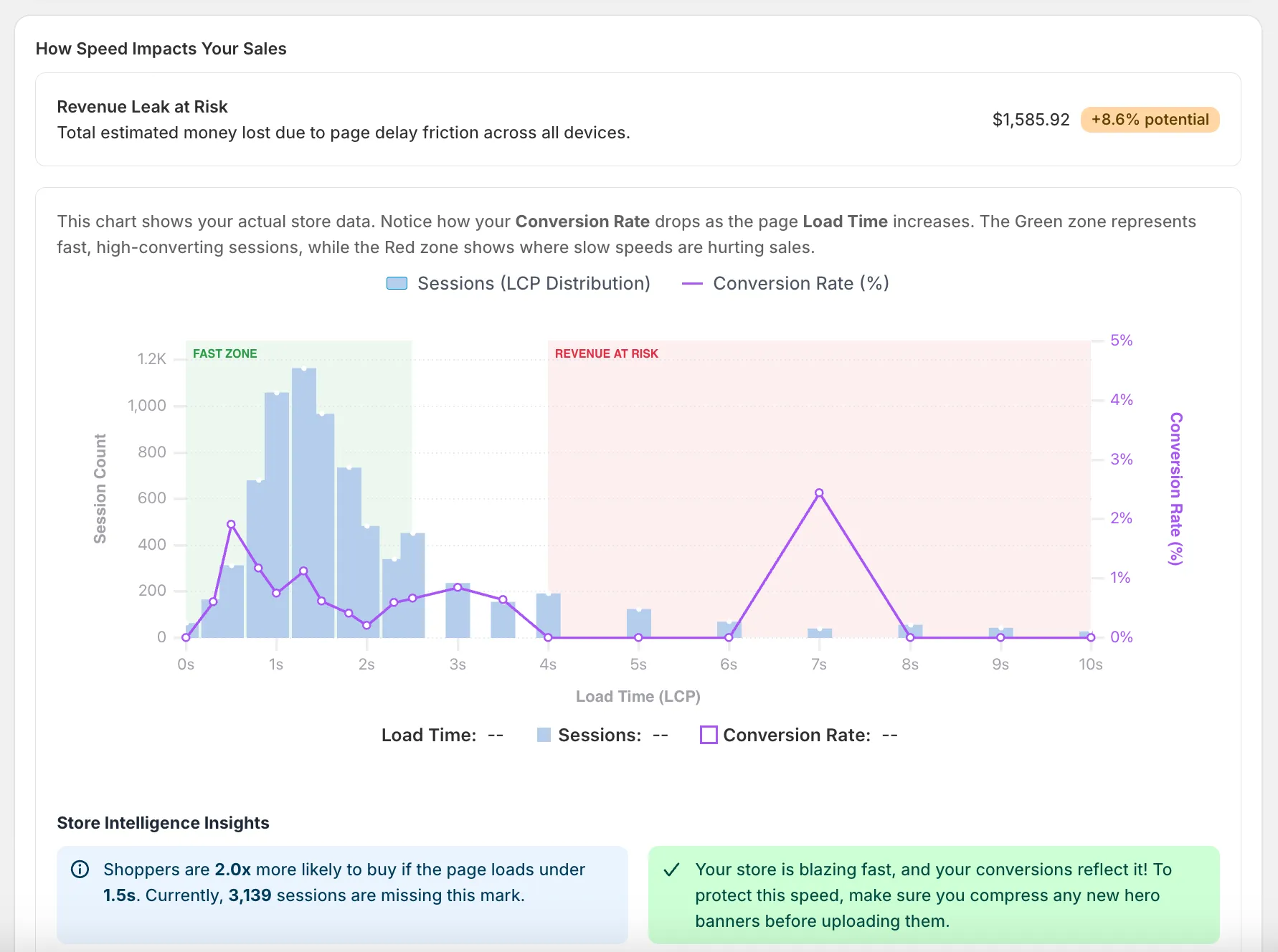
Superspeed doesn’t just report on load times; it calculates the financial cost of poor performance. By analyzing real user sessions, Superspeed identifies “revenue leaks”—specific pages or interactions where technical friction is causing high-intent buyers to abandon their sessions. For a growth agency, finding and fixing a $10,000/month revenue leak on a checkout page is a massive, immediate win for the client.
Real User Monitoring (RUM) for True Insight
Synthetic tests like Lighthouse are insufficient for growth analysis. Superspeed utilizes Real User Monitoring (RUM) to track exactly how the store performs for actual shoppers across different devices, networks, and geographies. This ensures that optimization efforts are based on factual user experiences, not simulated lab scores.
Validating Technical Growth Initiatives
When a growth agency recommends a major technical initiative—such as a theme redesign, a headless migration, or a significant tech stack consolidation—they need to prove the ROI of that investment. Superspeed provides the “before and after” RUM data necessary to definitively demonstrate how the technical improvement directly resulted in better engagement and higher revenue.
The Growth Agency Workflow Upgraded
Integrating Superspeed transforms how a growth agency approaches scaling a Shopify brand.
- Holistic Auditing: Before launching major scaling campaigns, the agency uses Superspeed to audit the storefront, ensuring it can handle the increased traffic without buckling under performance strain.
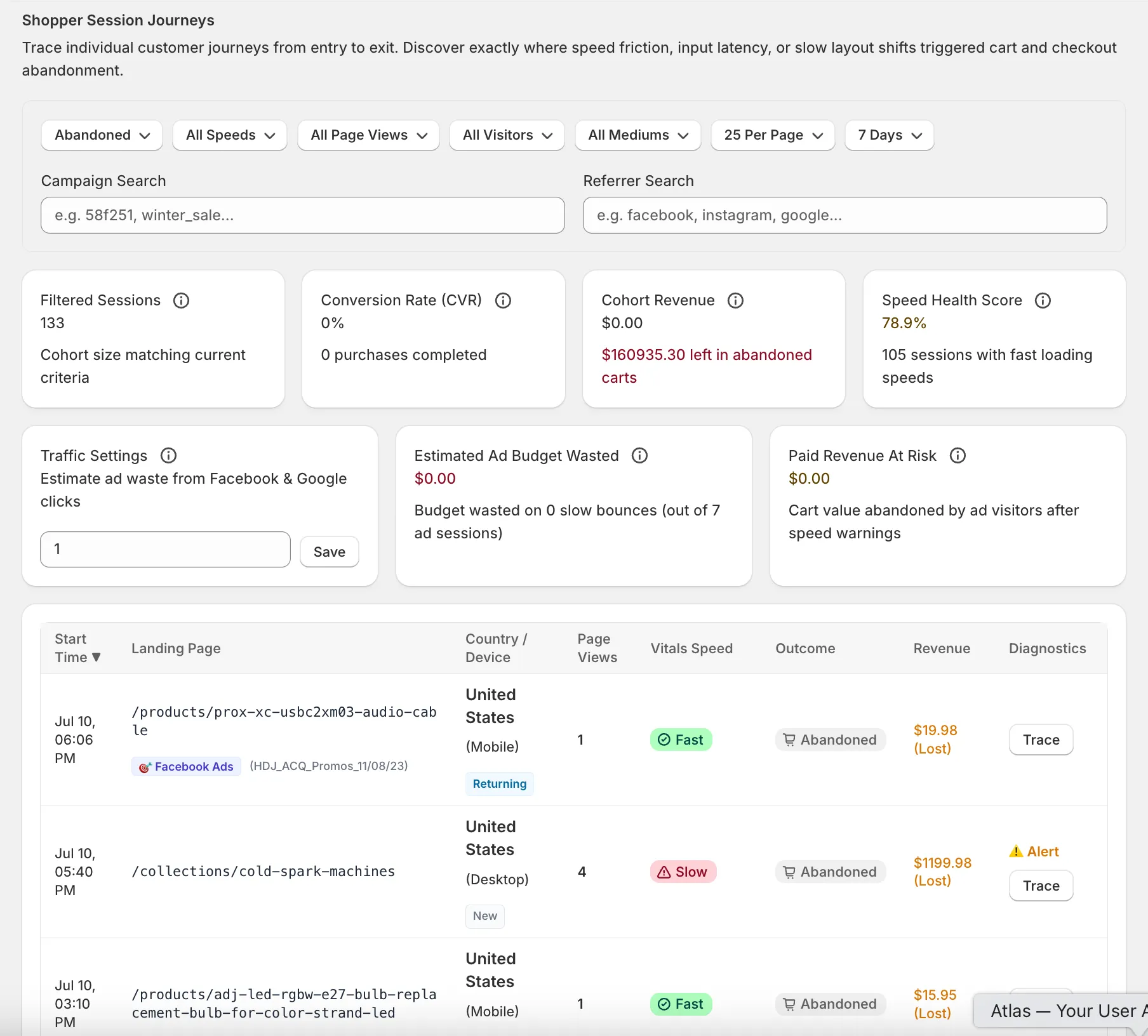
- Frictionless Funnels: The team uses session tracing to identify exactly where users are experiencing delays or broken interactions (like rage clicks) within the conversion funnel, allowing developers to target fixes precisely.
- Protecting the Checkout: Superspeed’s ghost checkout detection becomes a critical daily metric. The agency monitors the checkout flow intensely to ensure no technical failures are artificially suppressing the conversion rate.
- Proving Agency Value: During monthly client reviews, the growth agency isn’t just presenting ROAS numbers; they are presenting “Recovered Revenue”—showing the client exactly how much money the agency saved them by identifying and eliminating technical friction.
Conclusion
True ecommerce growth requires a flawless user experience. For growth agencies, treating performance as an afterthought is no longer viable.
Superspeed provides the essential revenue intelligence layer that empowers growth agencies to look beyond marketing metrics and optimize the technical foundation of their clients’ stores. By identifying revenue leaks, monitoring real-user performance, and proving the financial impact of technical optimizations, growth agencies can unlock hidden revenue and drive predictable, sustainable scaling for their Shopify brands.