

The CRO Intelligence Platform for Shopify Agencies
For Conversion Rate Optimization (CRO) agencies working with Shopify brands, the ultimate metric of success is revenue uplift. Yet, many agencies find themselves trapped in a cycle of endless A/B testing, debating button colors, and making minor layout tweaks, all while struggling to prove that their work is driving actual business growth.
The reality is that a significant portion of lost conversions isn’t due to poor design or unpersuasive copy—it’s caused by technical friction. When a page is slow to respond, a script blocks the main thread, or a layout shifts right as the user clicks “Add to Cart,” the conversion is lost regardless of how optimized the messaging is. To truly maximize a client’s revenue, CRO agencies need tools that look beyond the visual layer and uncover the hidden technical barriers blocking the path to purchase.
The CRO Reporting Problem
Reporting success in CRO is notoriously difficult. Agencies often face skepticism when presenting results to clients, and the traditional reporting methods frequently fall short.
Conversion Rates Fluctuate
Conversion rates are highly volatile. They can be influenced by seasonality, changes in ad traffic quality, inventory shortages, or even the day of the week. When a CRO agency reports a 0.5% lift in conversion rate, clients naturally wonder if the increase was truly due to the agency’s work or just a natural fluctuation in traffic behavior.
Clients Questioning Results
Because conversion rates are influenced by so many external factors, clients frequently question the validity of A/B test results. If an experiment shows a winner, but overall store revenue is down due to a slow shipping month, the agency struggles to defend the value of their retainer.
The Difficulty of Attribution
Proving exactly which optimization led to a specific sale is complex. When a shopper visits a site multiple times before buying, attributing that revenue to a specific layout change or speed improvement requires deep, session-level intelligence that standard analytics simply cannot provide.
Why Analytics Alone Miss Conversion Leaks
Most CRO agencies rely heavily on tools like Google Analytics, Shopify Analytics, or visual heatmap software. While these tools are essential for understanding general traffic patterns and layout interactions, they are blind to the technical realities of the user experience.
- Abandoned Checkouts: Analytics will tell you that a user abandoned their cart, but not why. Was the shipping cost too high, or did a third-party script cause the checkout button to become unresponsive for five seconds?
- Rage Clicks: Heatmaps might show intense clicking on a specific element, indicating frustration. However, without performance data, you won’t know if the rage clicks are due to a confusing design or a slow-to-execute JavaScript function locking up the browser.
- JavaScript Issues: Modern Shopify stores rely heavily on JavaScript for dynamic functionality. When these scripts fail or block rendering, the user experience breaks, but analytics platforms rarely capture these silent failures.
- Slow Interactions and INP: A page might visually load quickly, but if it takes too long to respond to a user’s input (measured by Interaction to Next Paint - INP), the user assumes the site is broken and leaves.
- Mobile Friction: Mobile shoppers are especially sensitive to performance issues. A heavy, unoptimized site might work perfectly on a developer’s fast desktop connection but cause massive layout shifts and frustrating delays on a 3G mobile network.
How Superspeed Helps CRO Agencies
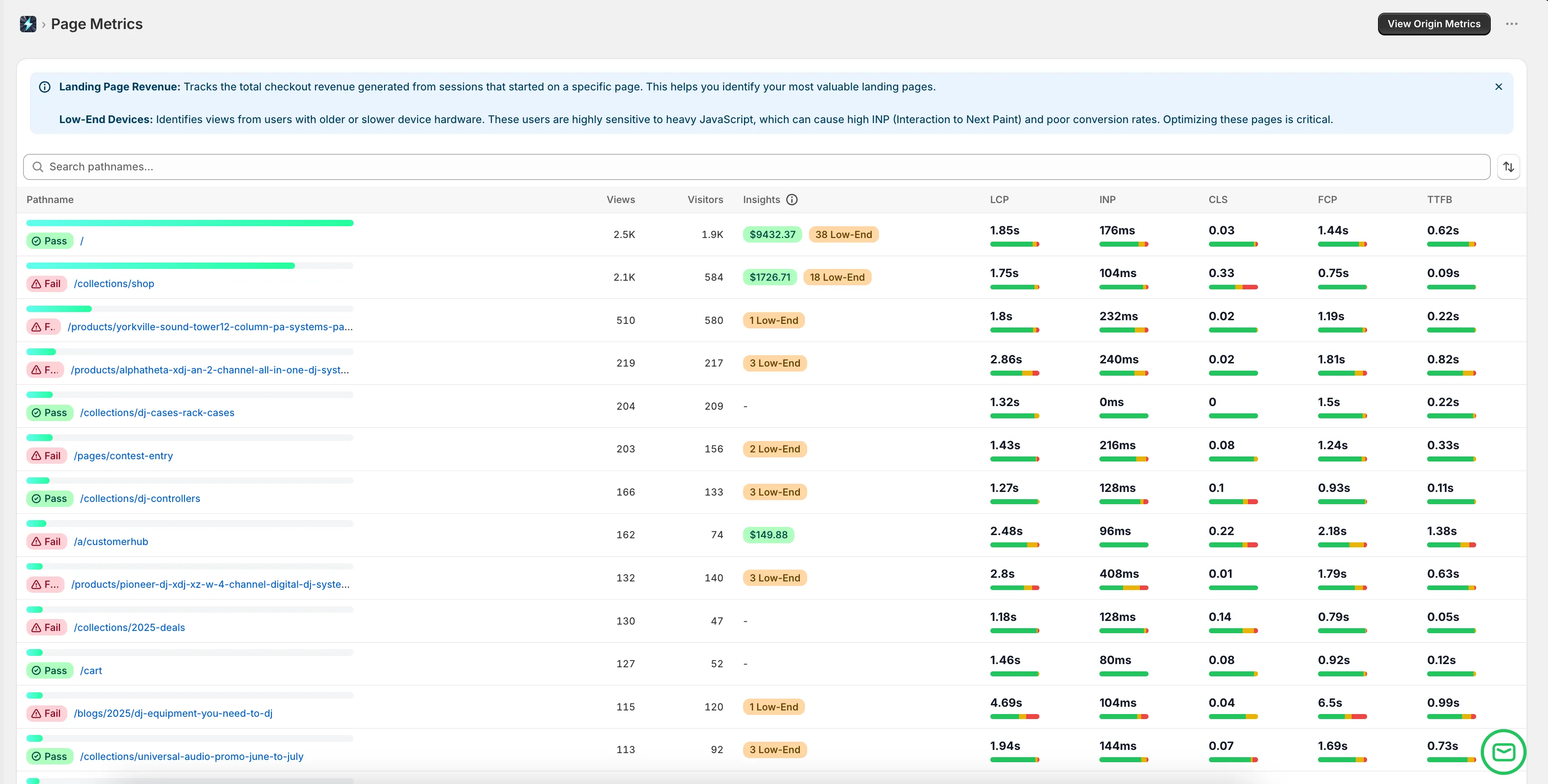
Superspeed provides CRO agencies with the missing technical layer of conversion intelligence. By illuminating exactly how technical performance impacts shopper behavior, agencies can identify high-impact optimization opportunities and definitively prove their value.
Session Tracing and Real User Monitoring (RUM)
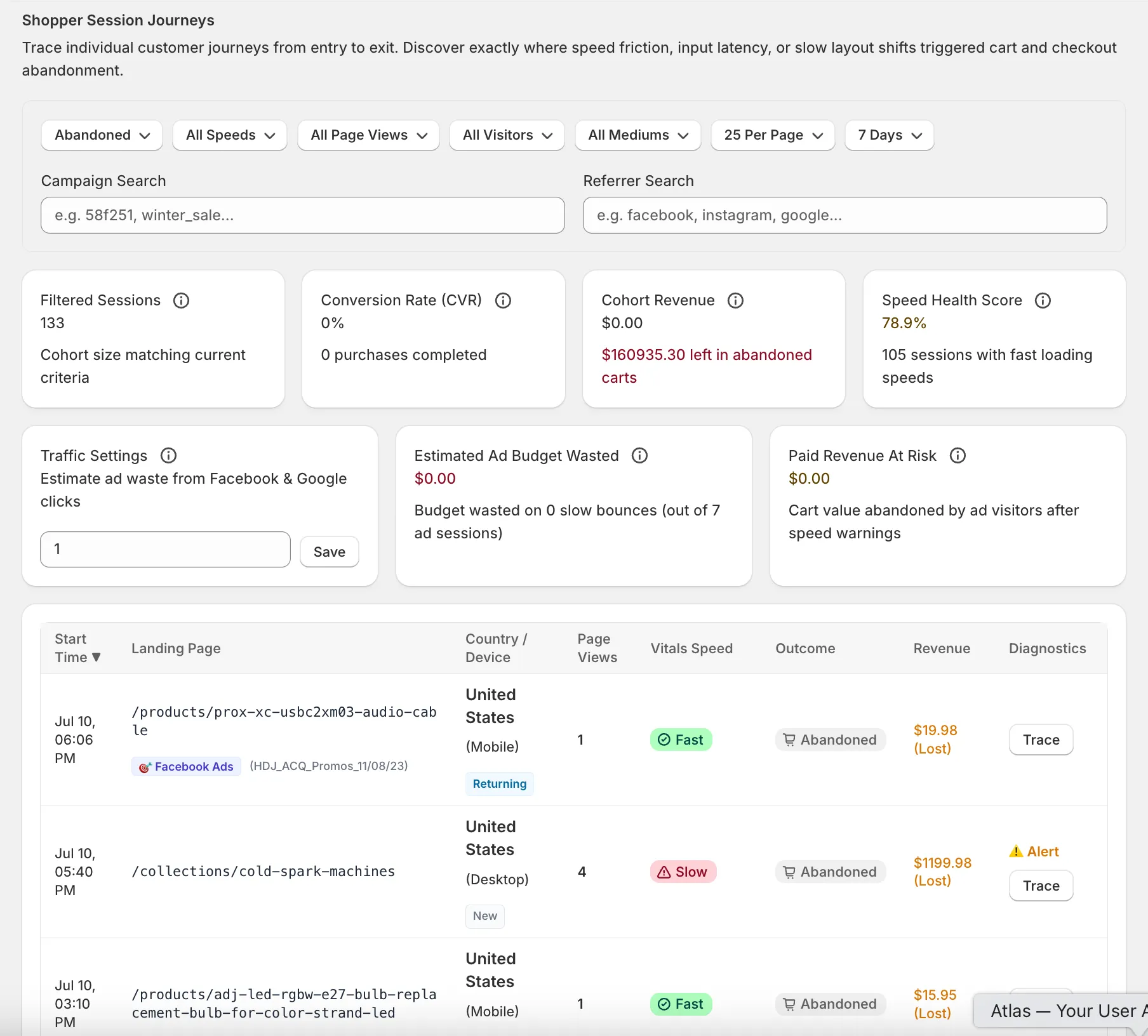
Superspeed doesn’t rely on synthetic lab tests. It uses Real User Monitoring (RUM) to track the actual performance experienced by real shoppers. By tracing sessions at a granular level, CRO agencies can see the exact performance bottlenecks that individual users encountered before abandoning their journey.
Ghost Checkout Detection
Superspeed specifically monitors the most critical part of the funnel: the checkout process. By identifying “ghost checkouts”—sessions where a high-intent shopper experienced a technical failure or severe latency right at the point of purchase—agencies can immediately prioritize fixes that directly recover lost revenue.
Revenue Impact Analysis
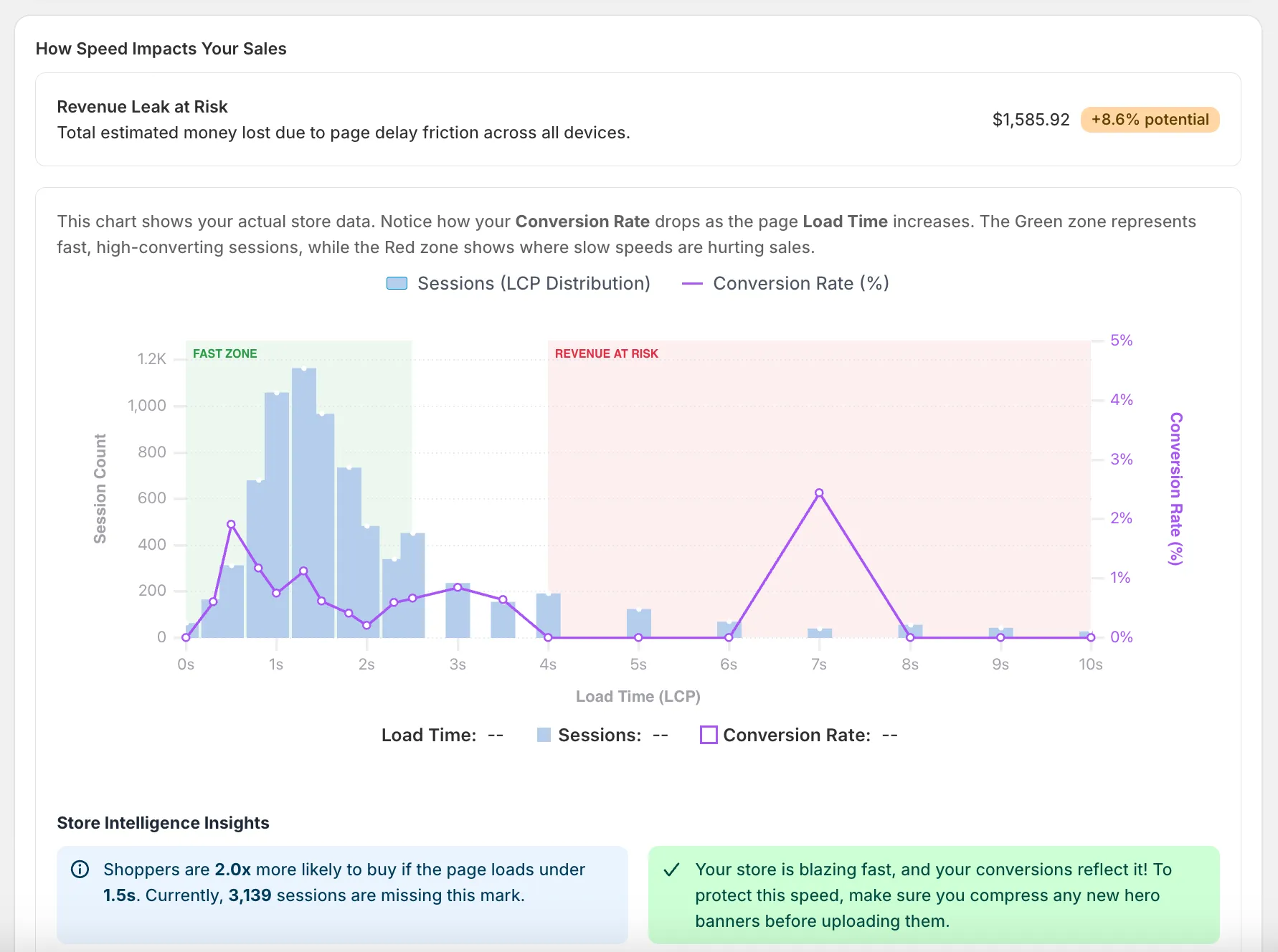
Instead of simply reporting on “faster load times,” Superspeed translates performance metrics into business outcomes. The platform calculates the revenue impact of technical friction, showing agencies and their clients exactly how much potential revenue is currently trapped behind a slow LCP or a poor INP score.
The Modern CRO Workflow Example
Integrating technical performance data fundamentally changes how a CRO agency operates, making them faster, more targeted, and more profitable.
The Traditional “Before” Workflow:
- Formulate a hypothesis based on a heatmap.
- Design a new layout.
- Run an A/B test for three weeks.
- Wait for statistical significance.
- Report a marginal improvement in conversion rate.
The “After” Workflow with Superspeed:
- Identify Friction: The agency logs into the Superspeed dashboard and immediately sees that mobile users on product pages are experiencing severe Interaction to Next Paint (INP) delays, resulting in a high abandonment rate.
- Fix the Issue: The agency’s development team identifies a bloated third-party review script causing the delay and defers its loading.
- Measure Revenue Impact: Within days, Superspeed’s RUM data confirms the INP issue is resolved, and the dashboard clearly demonstrates the corresponding uplift in recovered revenue from those mobile sessions.
This technical optimization often yields faster and more significant results than traditional layout testing, providing an immediate ROI win for the client.
How Agencies Package This Into Retainers
By adding revenue intelligence to their toolkit, CRO agencies can create highly compelling, sticky retainer models.
Continuous CRO Monitoring
Instead of selling one-off audits or discrete testing packages, agencies can offer continuous monitoring retainers. The agency uses Superspeed to actively monitor the store’s health, alerting the client to new conversion leaks caused by theme updates or new app installations before they cause significant revenue loss.
Performance and Technical Retainers
Many CRO agencies are expanding their services to include technical performance optimization. By bundling Superspeed’s insights with their existing development capabilities, agencies can create lucrative retainers focused specifically on maintaining Core Web Vitals and eliminating technical friction.
Optimization Subscriptions
Agencies can offer an “Optimization Subscription” where they guarantee a proactive approach to maximizing the store’s potential. Superspeed provides the reporting backbone for this subscription, giving the agency a clear, objective dashboard to present during monthly client reviews to prove the ongoing value they are delivering.
Conclusion
The era of CRO being solely about button colors and headline variations is ending. Today, the most successful agencies recognize that technical performance is a foundational element of the conversion rate.
By integrating Superspeed into their stack, CRO agencies transform themselves from experiment vendors into indispensable revenue partners. They move beyond debating statistical significance and start proving, with hard data, exactly how their technical optimizations are eliminating friction and driving measurable growth for their Shopify clients.